



Don’t Fear the Reaper — Everything Is Under Control

Don't Fear the Reaper — Everything Is Under Control
Rev. Kat Carroll
Oct. 5, 2026 - (a 12 min or less read)
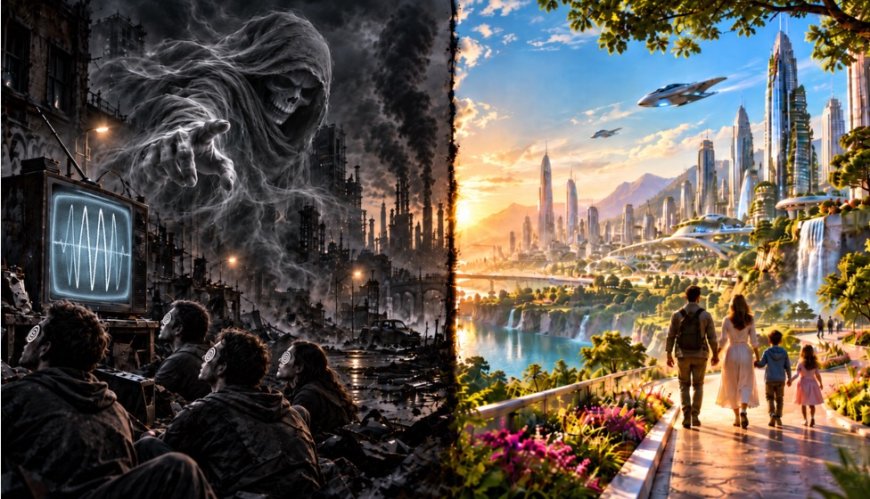
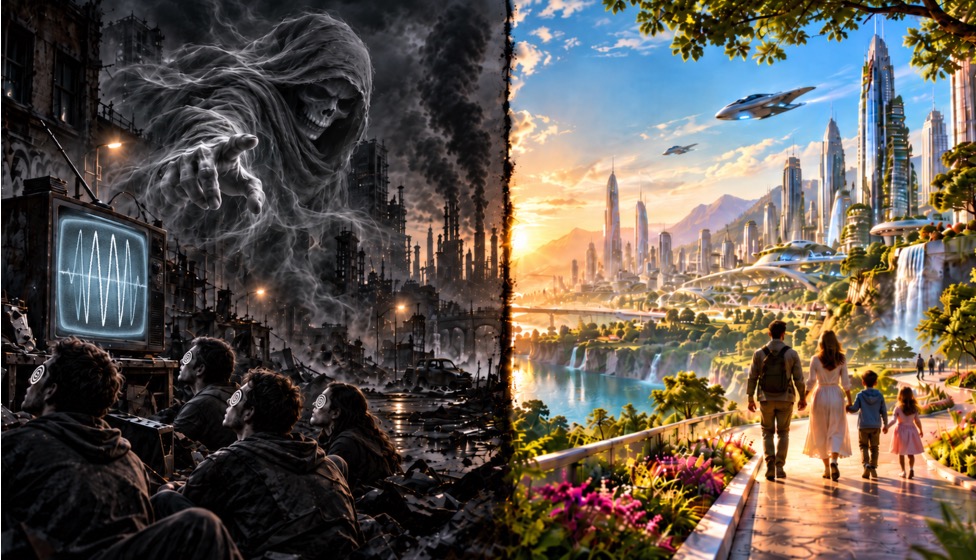
Do you remember the opening of the 1963 science-fiction television series The Outer Limits? A mysterious voice announced:
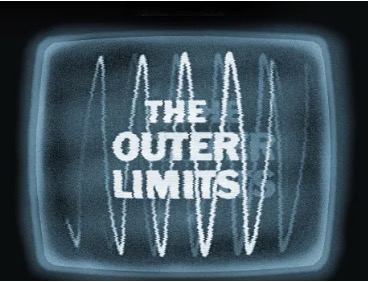 "There is nothing wrong with your television set. Do not attempt to adjust the picture.
We control the transmission."
The voice continued, explaining that everything viewers saw and heard would be controlled for the next hour. There was nothing for the audience to do but sit quietly and watch, as if under a spell.
It was science fiction, of course, but looking back, what an interesting metaphor for the influence television and mass media would have on generations of viewers! We were captivated by the programs, and even the news which may not always have been accurate.
"There is nothing wrong with your television set. Do not attempt to adjust the picture.
We control the transmission."
The voice continued, explaining that everything viewers saw and heard would be controlled for the next hour. There was nothing for the audience to do but sit quietly and watch, as if under a spell.
It was science fiction, of course, but looking back, what an interesting metaphor for the influence television and mass media would have on generations of viewers! We were captivated by the programs, and even the news which may not always have been accurate.
 For decades, a relatively small number of broadcasting networks, publishers, and other institutions determined much of what reached the public. They didn't necessarily have to tell us what to think, but by selecting what information we received, what was repeated, and what was omitted, they could influence our thinking.
And nothing commands attention quite like fear.
Fear is a powerful survival mechanism, but prolonged fear and uncertainty can interfere with our ability to evaluate information calmly and make independent decisions.
And in recent weeks, fearful narratives have been everywhere.
For some, it's easier to surrender important decisions to someone we perceive as a higher authority, trusting that they know more than we do and have everything under control.
But that relationship seems to be changing.
In my previous article, "Who Were the Guardians of Knowledge, and What Have They Been Protecting?", we explored the preservation, concealment, and possible loss of knowledge throughout history - From ancient civilizations and mystery traditions to religious institutions, secret societies, and modern intelligence organizations, questions about who controls information have captivated us for a very long time.
We also considered the possibility that some knowledge may have been protected against future cataclysms, while other discoveries may have been withheld because they challenged established institutions, financial interests, or prevailing beliefs. I left that investigation with another thought.
Humanity seems to be becoming its own guardian of knowledge, building on lessons of the past.
For decades, a relatively small number of broadcasting networks, publishers, and other institutions determined much of what reached the public. They didn't necessarily have to tell us what to think, but by selecting what information we received, what was repeated, and what was omitted, they could influence our thinking.
And nothing commands attention quite like fear.
Fear is a powerful survival mechanism, but prolonged fear and uncertainty can interfere with our ability to evaluate information calmly and make independent decisions.
And in recent weeks, fearful narratives have been everywhere.
For some, it's easier to surrender important decisions to someone we perceive as a higher authority, trusting that they know more than we do and have everything under control.
But that relationship seems to be changing.
In my previous article, "Who Were the Guardians of Knowledge, and What Have They Been Protecting?", we explored the preservation, concealment, and possible loss of knowledge throughout history - From ancient civilizations and mystery traditions to religious institutions, secret societies, and modern intelligence organizations, questions about who controls information have captivated us for a very long time.
We also considered the possibility that some knowledge may have been protected against future cataclysms, while other discoveries may have been withheld because they challenged established institutions, financial interests, or prevailing beliefs. I left that investigation with another thought.
Humanity seems to be becoming its own guardian of knowledge, building on lessons of the past.
 What If We're More Prepared Than We Realize?
We hear plenty of alarming predictions about the possible collapse of civilization. Wars and rumors of wars, a massive coronal mass ejection (CME) from the Sun, a severe electromagnetic pulse (EMP), another Carrington Event, or a prolonged failure of our electrical grid could dramatically disrupt modern life.
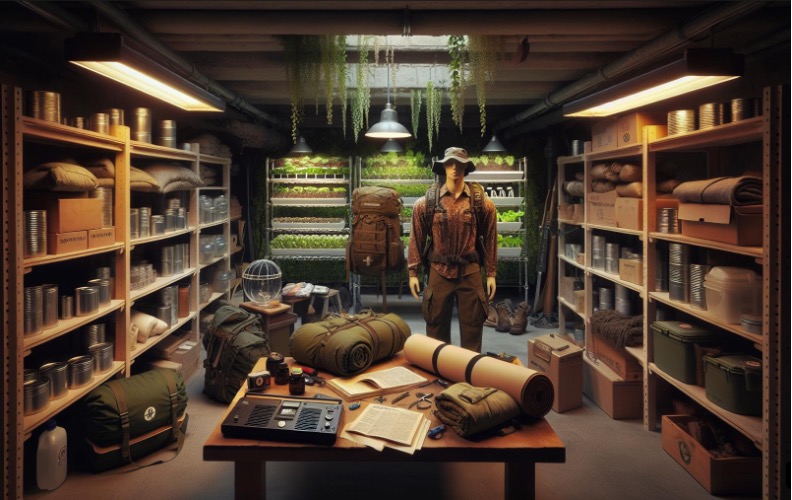 All the things that could frighten an unsuspecting civilization into compliance, or leave people so overwhelmed by fear that they simply shut down.
We often hear about the vulnerabilities of modern civilization. We hear considerably less about the systems designed to protect it. And some of those preparations are remarkable.
All the things that could frighten an unsuspecting civilization into compliance, or leave people so overwhelmed by fear that they simply shut down.
We often hear about the vulnerabilities of modern civilization. We hear considerably less about the systems designed to protect it. And some of those preparations are remarkable.
Lessons From the Carrington Event
In September 1859, Earth experienced one of the most powerful geomagnetic storms in recorded history, commonly called the Carrington Event, after astronomer Richard Carrington. Auroras illuminated skies far beyond their usual polar regions. Telegraph operators experienced electrical shocks, sparks, fires, and equipment failures as powerful electrical currents were induced in long telegraph wires. Remarkably, some operators discovered that their equipment could continue transmitting messages even after they disconnected their batteries. The geomagnetic storm itself was producing sufficient electrical current in the lines. An extraordinary natural event had demonstrated that electrical energy could be induced into long conductors without the usual power source. NOAA: What Was the Carrington Event?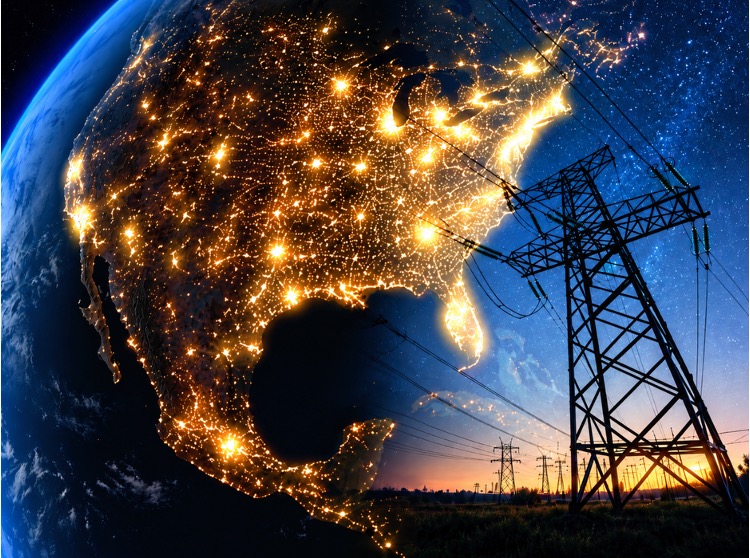 Now imagine something similar happening today.
Our electrical grids extend across enormous distances. Satellites provide navigation and communications. Banking, water distribution, food refrigeration, fuel stations, hospitals, and much of our transportation infrastructure depend upon electricity.
A sufficiently powerful solar storm could disrupt these services and potentially damage major transformers. A high-altitude nuclear EMP presents a different set of risks, including a fast electromagnetic pulse capable of affecting susceptible electronics.
But here's something often overlooked.
We are no longer using 1859 technology!
Electrical utilities monitor solar activity and operate under reliability standards addressing geomagnetic disturbances. Protective relays, operating procedures, and grid-isolation measures can help reduce damage.
Communications providers have increasingly adopted fiber optics. Unlike conventional copper communication wires, optical fibers transmit information through light rather than electrical current, making the fibers themselves resistant to electromagnetic interference. Many cables are also installed underground, protecting them from weather and physical damage.
Even our vehicles are not necessarily as vulnerable as some catastrophic predictions suggest.
A severe solar storm doesn't automatically destroy automobile electronics or discharge batteries. Nor does a nuclear EMP necessarily disable every vehicle.
While an extreme event could cause widespread disruptions, it doesn't mean that every vehicle, computer, or electrical device would suddenly become useless. NOAA: Solar Storms and Our Infrastructure
Now imagine something similar happening today.
Our electrical grids extend across enormous distances. Satellites provide navigation and communications. Banking, water distribution, food refrigeration, fuel stations, hospitals, and much of our transportation infrastructure depend upon electricity.
A sufficiently powerful solar storm could disrupt these services and potentially damage major transformers. A high-altitude nuclear EMP presents a different set of risks, including a fast electromagnetic pulse capable of affecting susceptible electronics.
But here's something often overlooked.
We are no longer using 1859 technology!
Electrical utilities monitor solar activity and operate under reliability standards addressing geomagnetic disturbances. Protective relays, operating procedures, and grid-isolation measures can help reduce damage.
Communications providers have increasingly adopted fiber optics. Unlike conventional copper communication wires, optical fibers transmit information through light rather than electrical current, making the fibers themselves resistant to electromagnetic interference. Many cables are also installed underground, protecting them from weather and physical damage.
Even our vehicles are not necessarily as vulnerable as some catastrophic predictions suggest.
A severe solar storm doesn't automatically destroy automobile electronics or discharge batteries. Nor does a nuclear EMP necessarily disable every vehicle.
While an extreme event could cause widespread disruptions, it doesn't mean that every vehicle, computer, or electrical device would suddenly become useless. NOAA: Solar Storms and Our Infrastructure
Everything Is Under Control — Or at Least There's a Backup Plan!
Fortunately, considerable planning has already gone into protecting our essential services. The United States already has systems intended to keep critical services functioning during electrical emergencies.- Hospitals maintain emergency power for essential medical equipment, surgical services, and life-support systems.
- Water and wastewater utilities use various combinations of backup generators, battery systems, storage reservoirs, and emergency pumping arrangements. Some water distribution systems can continue operating temporarily through gravity, even without electrical pumps.
- Nuclear power stations have particularly extensive safety requirements. These include redundant electrical supplies, emergency diesel generators, and backup systems designed to maintain critical cooling and shutdown functions.
What's Happening Underground?
This is where our investigation becomes especially interesting. Many people have heard stories about underground transportation systems, vast storage facilities, protected archives, and complexes hidden within mountains.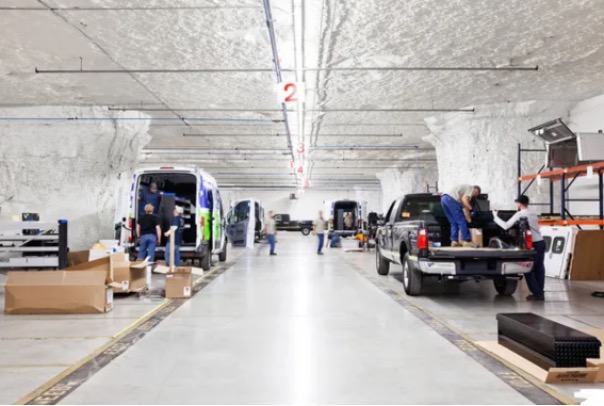 These facilities that are very real, commercially active, and operating in plain sight. Some have even been filmed by truck drivers making deliveries, with videos shared on YouTube.
Consider SubTropolis, an enormous underground complex beneath Kansas City, Missouri.
Developed within former limestone mines, the complex contains miles of paved roads, railway connections, loading docks, commercial storage facilities, and warehouses.
And some of those warehouses store food.
The facility supports temperature-controlled storage and distribution operations, including refrigerated products. Its naturally stable underground temperatures reduce heating and cooling costs, while redundant electrical infrastructure provides additional reliability.
Imagine how useful such facilities could become during an emergency affecting surface transportation, regional food supplies, or conventional distribution centers. They represent existing infrastructure that could potentially help support emergency logistics while damaged systems are restored. Hunt Midwest: SubTropolis Food and Beverage Facilities
Chicago once operated an extensive underground freight railway system transporting coal, merchandise, and supplies directly beneath downtown streets. Handy, considering the traffic situation in that area.
And governments have long maintained protected military installations, storage depots, transportation facilities, and continuity-of-government infrastructure.
Additional restricted underground systems and emergency stockpiles likely exist that the public knows little about.
What we can establish is that a significant amount of our storage, transportation, and protective infrastructure already exists beneath the surface.
And that brings us to something even more extraordinary.
These facilities that are very real, commercially active, and operating in plain sight. Some have even been filmed by truck drivers making deliveries, with videos shared on YouTube.
Consider SubTropolis, an enormous underground complex beneath Kansas City, Missouri.
Developed within former limestone mines, the complex contains miles of paved roads, railway connections, loading docks, commercial storage facilities, and warehouses.
And some of those warehouses store food.
The facility supports temperature-controlled storage and distribution operations, including refrigerated products. Its naturally stable underground temperatures reduce heating and cooling costs, while redundant electrical infrastructure provides additional reliability.
Imagine how useful such facilities could become during an emergency affecting surface transportation, regional food supplies, or conventional distribution centers. They represent existing infrastructure that could potentially help support emergency logistics while damaged systems are restored. Hunt Midwest: SubTropolis Food and Beverage Facilities
Chicago once operated an extensive underground freight railway system transporting coal, merchandise, and supplies directly beneath downtown streets. Handy, considering the traffic situation in that area.
And governments have long maintained protected military installations, storage depots, transportation facilities, and continuity-of-government infrastructure.
Additional restricted underground systems and emergency stockpiles likely exist that the public knows little about.
What we can establish is that a significant amount of our storage, transportation, and protective infrastructure already exists beneath the surface.
And that brings us to something even more extraordinary.
Knowledge Preserved Below the Surface
Deep inside mountains, abandoned mines, and engineered underground vaults, enormous collections of information are being preserved for future generations. Some may be intended to survive hundreds or even thousands of years. The Arctic World Archive, located in a former coal mine on the Norwegian island of Spitsbergen, preserves important historical documents and digital information on specialized archival film designed for long-term storage. Here's an intriguing convergence with recent news: Greenland and Svalbard are part of the same strategically important Arctic region, where we find military surveillance infrastructure, protected archives, seed vaults, scientific installations, and critical shipping passages. Interestingly, President Donald Trump recently signed a security agreement with Denmark and Greenland on September 22, 2026, during the U.N. General Assembly. And unlike ordinary computer storage, this medium doesn't require continuous electricity to preserve its contents. I imagine there wouldn't be much of a cooling problem either! One particularly interesting collection is GitHub's Arctic Code Vault.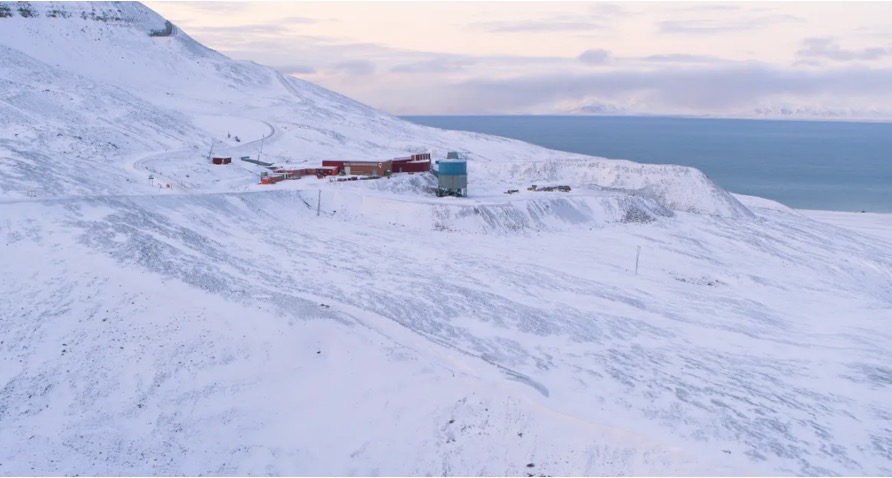 In 2020, GitHub archived a snapshot of its active public software repositories, recording an enormous collection of computer code on durable film. The archive also incorporates explanatory materials to help future generations understand computers, software, and the foundational knowledge necessary to interpret the stored information.
If future generations lost access to modern computing systems, these records could help them recover the technological knowledge necessary to rebuild. GitHub: Arctic Code Vault
Austria has another remarkable project called Memory of Mankind.
Located in the Hallstatt salt mine, it preserves information on durable ceramic tablets intended to endure far beyond the lifespan of conventional paper or electronic storage.
And in the United States, Iron Mountain operates protected underground storage complexes for important records, historical materials, and digital information. These projects use different preservation methods but share an important objective.
Interestingly, many of these archives aren't secret. They openly describe their missions, technologies, and preservation goals.
In 2020, GitHub archived a snapshot of its active public software repositories, recording an enormous collection of computer code on durable film. The archive also incorporates explanatory materials to help future generations understand computers, software, and the foundational knowledge necessary to interpret the stored information.
If future generations lost access to modern computing systems, these records could help them recover the technological knowledge necessary to rebuild. GitHub: Arctic Code Vault
Austria has another remarkable project called Memory of Mankind.
Located in the Hallstatt salt mine, it preserves information on durable ceramic tablets intended to endure far beyond the lifespan of conventional paper or electronic storage.
And in the United States, Iron Mountain operates protected underground storage complexes for important records, historical materials, and digital information. These projects use different preservation methods but share an important objective.
Interestingly, many of these archives aren't secret. They openly describe their missions, technologies, and preservation goals.
AI as a Guardian of Information
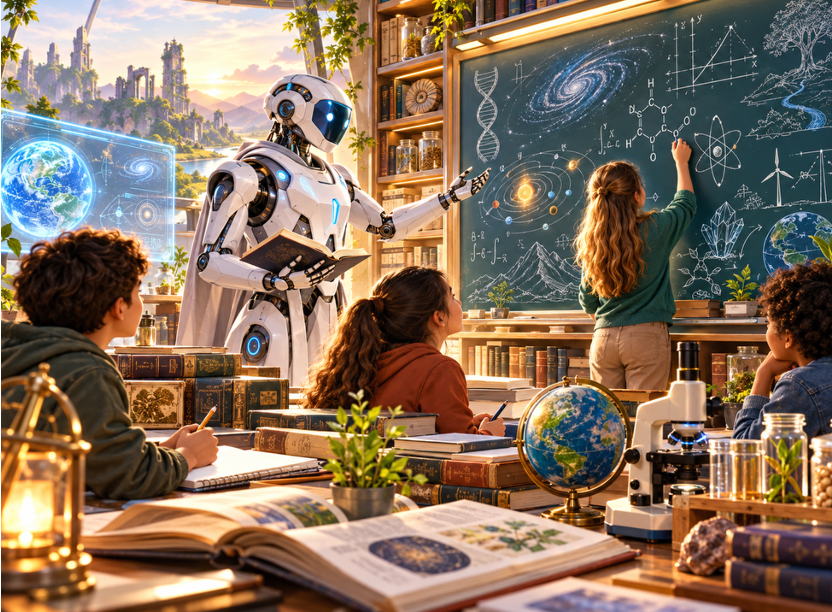 Artificial intelligence could eventually serve as an extraordinary tool for recovering and applying preserved knowledge. Consider how much AI can already help us discover about humanity through scientific research, historical records, literature, and the enormous body of knowledge available to it. We already rely on AI in schools and for home teaching.
Imagine an offline AI system containing engineering manuals, medical references, agricultural instructions, historical records, and scientific research.
With reliable, independent power, AI could help communities interpret technical documents, diagnose equipment problems, rapidly rebuild infrastructure, or restore agricultural production.
With underground data centers and archived software collections already in existence, perhaps protected AI systems could also become part of humanity's plans for restoring civilization.
And perhaps the most important feature of such an AI wouldn't be its intelligence alone, but its accessibility. After all, what good would a library of humanity's accumulated wisdom be if its contents remained locked away from the people who needed them?
The archives could preserve the information. AI could help humanity understand and use it.
But information alone won't keep civilization alive… We also need food.
Artificial intelligence could eventually serve as an extraordinary tool for recovering and applying preserved knowledge. Consider how much AI can already help us discover about humanity through scientific research, historical records, literature, and the enormous body of knowledge available to it. We already rely on AI in schools and for home teaching.
Imagine an offline AI system containing engineering manuals, medical references, agricultural instructions, historical records, and scientific research.
With reliable, independent power, AI could help communities interpret technical documents, diagnose equipment problems, rapidly rebuild infrastructure, or restore agricultural production.
With underground data centers and archived software collections already in existence, perhaps protected AI systems could also become part of humanity's plans for restoring civilization.
And perhaps the most important feature of such an AI wouldn't be its intelligence alone, but its accessibility. After all, what good would a library of humanity's accumulated wisdom be if its contents remained locked away from the people who needed them?
The archives could preserve the information. AI could help humanity understand and use it.
But information alone won't keep civilization alive… We also need food.
You Can't Eat Information
Imagine having access to every technical manual and scientific discovery ever recorded, but no reliable means of producing food.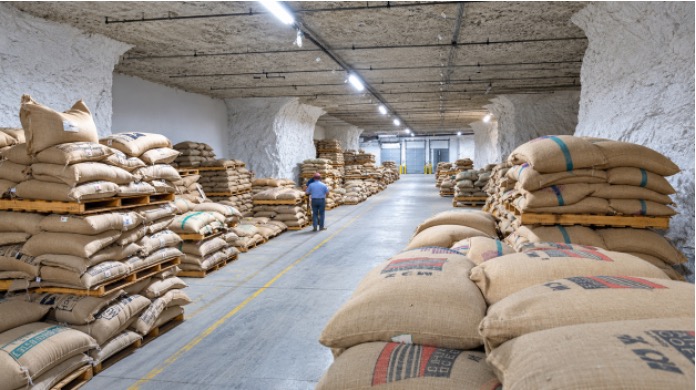 Within days of an extended electrical disruption, refrigeration becomes a concern. Without electricity, fuel, and transportation, supply chains can deteriorate quickly. And while underground warehouses might help preserve and distribute existing supplies, those inventories would eventually run out.
So, what happens next?
Fortunately, some of the world's most important protective facilities contain something more valuable than gold. They contain seeds.
Within days of an extended electrical disruption, refrigeration becomes a concern. Without electricity, fuel, and transportation, supply chains can deteriorate quickly. And while underground warehouses might help preserve and distribute existing supplies, those inventories would eventually run out.
So, what happens next?
Fortunately, some of the world's most important protective facilities contain something more valuable than gold. They contain seeds.
The Global Seed Vault — A Modern-Day Noah's Ark?
Deep inside a mountain in Norway's Svalbard archipelago is the Svalbard Global Seed Vault. Opened in 2008, this remarkable facility was designed to protect backup samples of agricultural seeds against war, natural disasters, equipment failures, and other threats to the world's crop collections. Its storage chambers are maintained at approximately minus 18 degrees Celsius. The surrounding mountain and permafrost provide additional protection, helping the seeds remain cold even if mechanical refrigeration fails.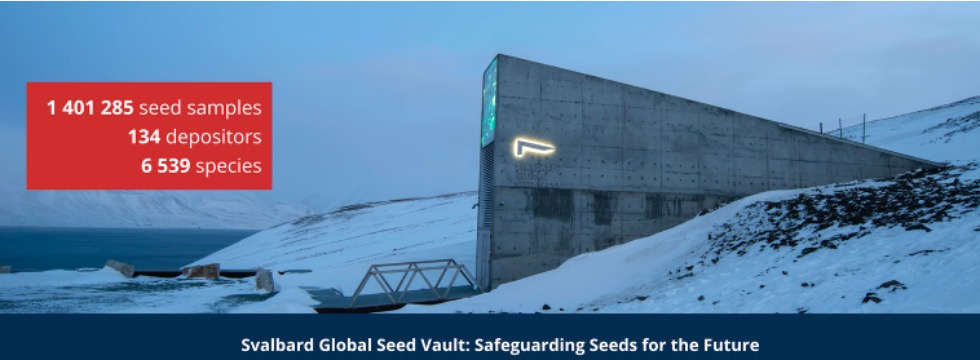 In June 2026, Svalbard surpassed 1.4 million stored seed samples, representing an extraordinary collection of agricultural biodiversity from around the world.
These aren't simply modern commercial crop varieties. The collections include traditional agricultural seeds, regional varieties, and plants with characteristics developed across generations of cultivation.
Some tolerate drought. Others resist disease, withstand particular climates, or contain genetic traits useful for future food security.
Seeds represent more than potential crops. They preserve humanity's agricultural history. Svalbard Global Seed Vault — Official Website
The United Kingdom maintains another remarkable collection at Kew's Millennium Seed Bank, located at Wakehurst in Sussex.
This underground facility preserves more than 2.5 billion seeds from over 40,000 wild plant species and taxa.
Its purpose extends beyond agriculture to biodiversity conservation, ecological restoration, and protecting plant species that may otherwise disappear. Kew: Millennium Seed Bank
The strongest argument for these facilities is that one of them has already demonstrated its value during a genuine crisis.
In June 2026, Svalbard surpassed 1.4 million stored seed samples, representing an extraordinary collection of agricultural biodiversity from around the world.
These aren't simply modern commercial crop varieties. The collections include traditional agricultural seeds, regional varieties, and plants with characteristics developed across generations of cultivation.
Some tolerate drought. Others resist disease, withstand particular climates, or contain genetic traits useful for future food security.
Seeds represent more than potential crops. They preserve humanity's agricultural history. Svalbard Global Seed Vault — Official Website
The United Kingdom maintains another remarkable collection at Kew's Millennium Seed Bank, located at Wakehurst in Sussex.
This underground facility preserves more than 2.5 billion seeds from over 40,000 wild plant species and taxa.
Its purpose extends beyond agriculture to biodiversity conservation, ecological restoration, and protecting plant species that may otherwise disappear. Kew: Millennium Seed Bank
The strongest argument for these facilities is that one of them has already demonstrated its value during a genuine crisis.
When the Backup Plan Actually Worked
During the conflict in Syria, the International Center for Agricultural Research in the Dry Areas (ICARDA) faced the loss of access to its major gene bank near Aleppo. Fortunately, important portions of its collection had already been duplicated at Svalbard. Beginning in 2015, ICARDA retrieved backup samples and used them to regenerate agricultural collections in Lebanon and Morocco.The backup system worked. ICARDA: Protecting Agricultural Genetic Resources Of course, maintaining a seed collection is not the same as maintaining a ready supply of food. Seeds must be retrieved, planted, cultivated, harvested, and distributed. Successful agriculture also requires clean water, healthy soil, suitable growing conditions, and experienced farmers. Nevertheless, these preservation efforts provide something essential: a foundation for recovery. The guardians aren't merely preserving information about how humanity once grew its food. They're preserving some of the very resources we would need to grow it again. From Preserving Knowledge to Rediscovering Technology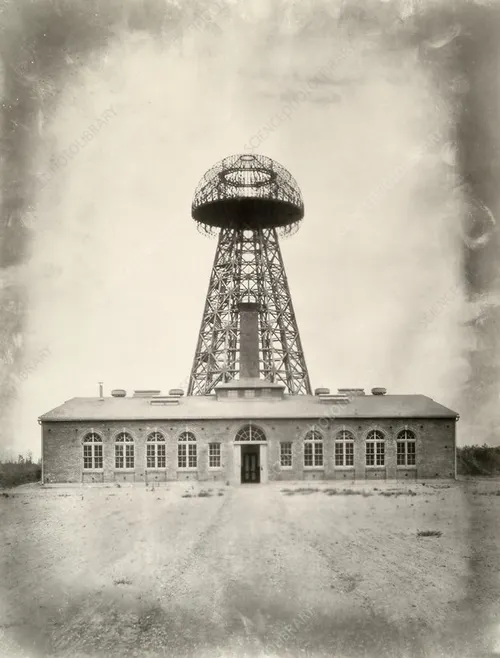 Now, let's return to another subject we explored in Part One... Nikola Tesla.
More than a century ago, Tesla envisioned transmitting electrical energy wirelessly over great distances.
His experiments culminated in construction of the Wardenclyffe Tower on Long Island, a project intended to advance worldwide wireless communication and potentially power transmission.
Tesla's vision was ambitious. But fulfilling it required enormous financial investment.
J.P. Morgan initially provided funding, reportedly investing approximately $150,000. As costs increased and competing radio technologies advanced, Morgan declined further financing.
Wardenclyffe was never completed as an operational global wireless power network. But here is where the story becomes particularly interesting.
Now, let's return to another subject we explored in Part One... Nikola Tesla.
More than a century ago, Tesla envisioned transmitting electrical energy wirelessly over great distances.
His experiments culminated in construction of the Wardenclyffe Tower on Long Island, a project intended to advance worldwide wireless communication and potentially power transmission.
Tesla's vision was ambitious. But fulfilling it required enormous financial investment.
J.P. Morgan initially provided funding, reportedly investing approximately $150,000. As costs increased and competing radio technologies advanced, Morgan declined further financing.
Wardenclyffe was never completed as an operational global wireless power network. But here is where the story becomes particularly interesting.
Tesla envisioned a technology that could potentially make energy widely accessible. Yet investors needed commercially viable systems that would provide returns on their investments.
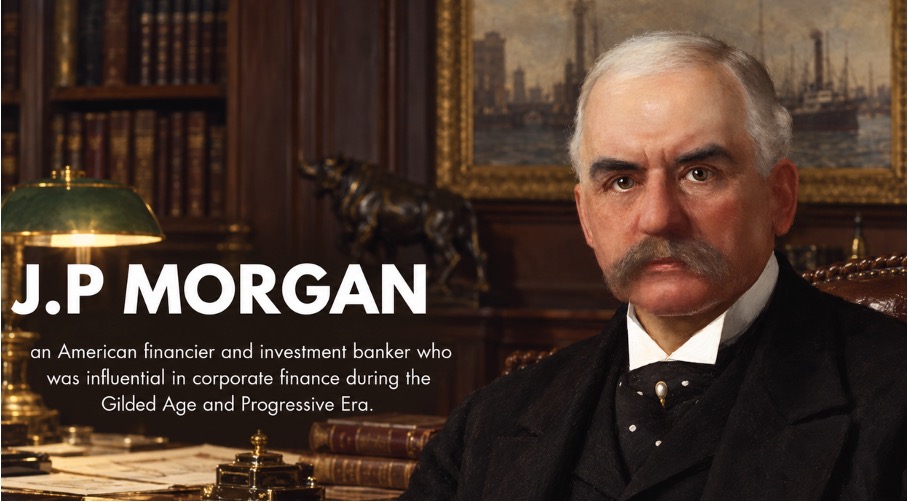 As historian W. Bernard Carlson has observed, financiers struggled to see how wireless electricity could be commodified, while Tesla considered generating revenue through receivers rather than charging for every unit of energy delivered.
There is an important distinction between a technology's value to humanity and its capacity to generate continuing revenue.
What happens when an invention could benefit millions of people, but doesn't provide a sufficiently attractive financial return to those funding its development?
Innovation requires resources, and the institutions controlling those resources can profoundly influence which technologies reach the public. Smithsonian: Tesla and the Problem of Commercializing Electricity
As historian W. Bernard Carlson has observed, financiers struggled to see how wireless electricity could be commodified, while Tesla considered generating revenue through receivers rather than charging for every unit of energy delivered.
There is an important distinction between a technology's value to humanity and its capacity to generate continuing revenue.
What happens when an invention could benefit millions of people, but doesn't provide a sufficiently attractive financial return to those funding its development?
Innovation requires resources, and the institutions controlling those resources can profoundly influence which technologies reach the public. Smithsonian: Tesla and the Problem of Commercializing Electricity
Could Tesla's Vision Finally Be Returning?
Today, scientists are exploring methods of transmitting electricity wirelessly, including technologies that would have seemed extraordinary even to Tesla. In 2023, researchers at the California Institute of Technology demonstrated wireless power transmission in space and successfully detected a small amount of energy beamed from an orbiting experiment to Earth. The technology was experimental, not a functioning space-based power station. But consider its implications. Solar satellites could potentially collect sunlight above Earth's atmosphere, convert that energy into electricity, and transmit it to receiving stations on the surface.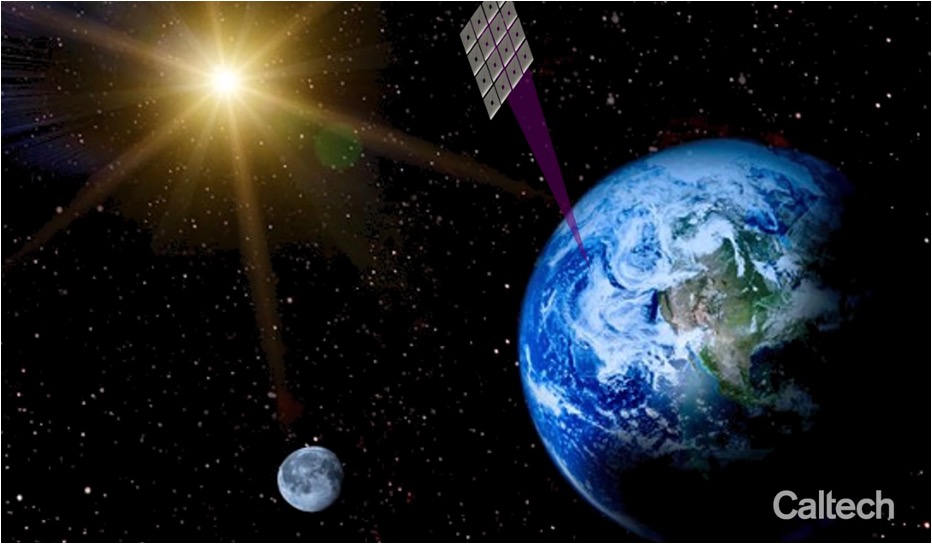 Such a system might someday provide additional options for supplying electricity to communities, industries, and infrastructure.
There are still enormous technical and economic challenges to overcome, including transmission efficiency, construction costs, launch requirements, and the protection of equipment.
Nevertheless, an idea once largely confined to speculative fiction is now the subject of serious scientific investigation. Caltech: Wireless Power Transmission From Space
Are We Rediscovering Something Ancient?
Tesla's ideas also invite another question.
Some researchers and independent investigators have hypothesized that pyramids found around the world may have once been involved in collecting, transforming, or distributing electrical energy. They are found in nearly every continent, including Antarctica and possibly in Australia, though whether they were built or natural phenomenon is still being debated.
If they are nearly everywhere and have been for thousands of years, why?
Imagine an ancient civilization capable of supplying energy to its communities without conventional transmission wires or batteries.
Although no convincing archaeological or engineering evidence has established that the pyramids functioned as global electrical power stations, that thought has persisted for decades as a possibility.
[caption id="attachment_112817" align="aligncenter" width="776"]
Such a system might someday provide additional options for supplying electricity to communities, industries, and infrastructure.
There are still enormous technical and economic challenges to overcome, including transmission efficiency, construction costs, launch requirements, and the protection of equipment.
Nevertheless, an idea once largely confined to speculative fiction is now the subject of serious scientific investigation. Caltech: Wireless Power Transmission From Space
Are We Rediscovering Something Ancient?
Tesla's ideas also invite another question.
Some researchers and independent investigators have hypothesized that pyramids found around the world may have once been involved in collecting, transforming, or distributing electrical energy. They are found in nearly every continent, including Antarctica and possibly in Australia, though whether they were built or natural phenomenon is still being debated.
If they are nearly everywhere and have been for thousands of years, why?
Imagine an ancient civilization capable of supplying energy to its communities without conventional transmission wires or batteries.
Although no convincing archaeological or engineering evidence has established that the pyramids functioned as global electrical power stations, that thought has persisted for decades as a possibility.
[caption id="attachment_112817" align="aligncenter" width="776"]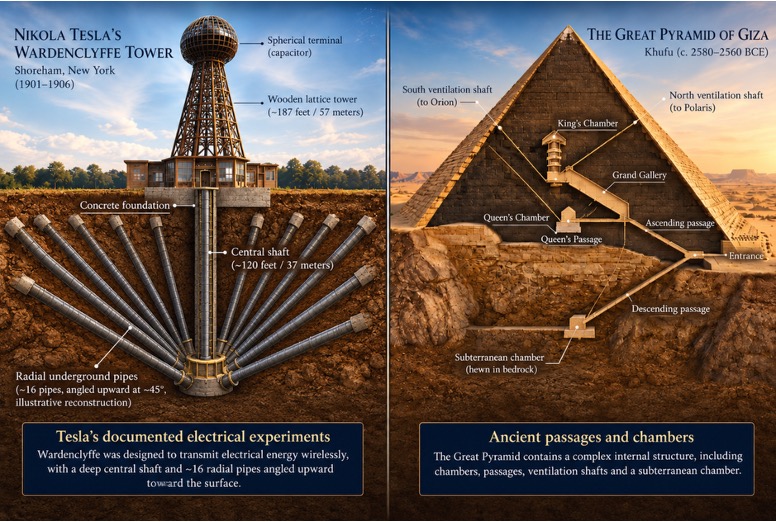 The Pyramid was found to have water underneath. Tesla's tower may have as well.[/caption]
Questions about forgotten technology, ancient engineering, and the possibility of lost knowledge have inspired investigators for generations. And that brings us back to the central theme of these two articles.
If civilizations before ours possessed discoveries we haven't yet recognized, how much knowledge might have been lost, forgotten, deliberately preserved, or restricted until humanity was ready to use it responsibly?
Tesla envisioned powering the world wirelessly, perhaps through networks of transmission towers. Today, we can also contemplate the possibilities of satellites collecting solar energy and delivering it to Earth.
And how much might we eventually rediscover through new scientific tools, fresh interpretations, and technologies that allow us to examine ancient structures in ways earlier generations couldn't?
The Pyramid was found to have water underneath. Tesla's tower may have as well.[/caption]
Questions about forgotten technology, ancient engineering, and the possibility of lost knowledge have inspired investigators for generations. And that brings us back to the central theme of these two articles.
If civilizations before ours possessed discoveries we haven't yet recognized, how much knowledge might have been lost, forgotten, deliberately preserved, or restricted until humanity was ready to use it responsibly?
Tesla envisioned powering the world wirelessly, perhaps through networks of transmission towers. Today, we can also contemplate the possibilities of satellites collecting solar energy and delivering it to Earth.
And how much might we eventually rediscover through new scientific tools, fresh interpretations, and technologies that allow us to examine ancient structures in ways earlier generations couldn't?
The Next Guardians May Be Us
Technology is changing rapidly, with new methods of generating and distributing energy that promise to be cleaner, cheaper, and more accessible. Perhaps knowledge that could transform civilization has been guarded, protected, forgotten, or simply overlooked for generations. And perhaps we are to be the new guardians of knowledge, becoming now mature enough to use it wisely. [caption id="attachment_112819" align="aligncenter" width="542"]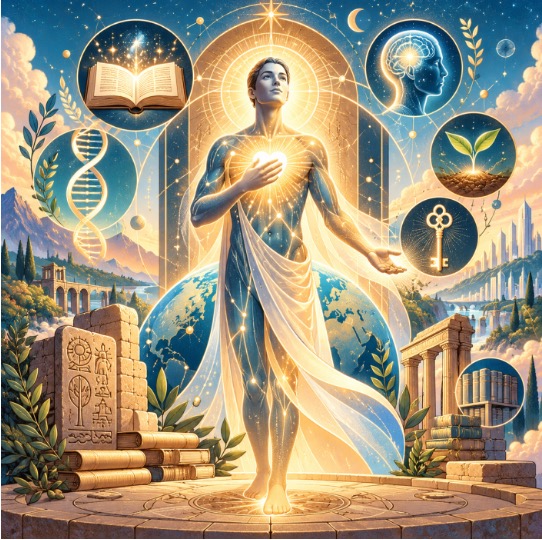 Are ye not gods, or guardians of the future?[/caption]
We've already seen remarkable efforts to preserve the foundations of civilization through scientific archives, backup power systems, underground facilities, agricultural seed banks, and increasingly sophisticated computing technologies.
They demonstrate something worth remembering... Humanity is resilient. We prepare. We preserve. We rebuild. And, perhaps most importantly, we learn. It's an interesting message to consider when we contemplate the survival of Earthly civilizations.
We have survived extraordinary challenges before, and the knowledge, resources, and technologies being preserved today offer reasons to believe that we can, and will, overcome future challenges as well.
The next great leap in humanity's development may not be determined simply by what we discover, but by what we choose to preserve and share. It should be based on our capacity to dream, to reach beyond perceived limitations, and to create a future where knowledge is not guarded for the benefit of a few but shared for the advancement of all.
Psalm 82:6 states, "I said, ‘You are “gods”; you are all sons of the Most High.’”
Let this generation be extraordinary!
Change is inevitable.
Fear doesn’t need to be.
Everything is under control. 😉
I'll leave you with this song: Blue Öyster Cult — "(Don't Fear) The Reaper"
Although the song was sometimes interpreted as something dark or ominous, songwriter Buck Dharma explained that its underlying themes involved the inevitability of death and the enduring nature of love.
Are ye not gods, or guardians of the future?[/caption]
We've already seen remarkable efforts to preserve the foundations of civilization through scientific archives, backup power systems, underground facilities, agricultural seed banks, and increasingly sophisticated computing technologies.
They demonstrate something worth remembering... Humanity is resilient. We prepare. We preserve. We rebuild. And, perhaps most importantly, we learn. It's an interesting message to consider when we contemplate the survival of Earthly civilizations.
We have survived extraordinary challenges before, and the knowledge, resources, and technologies being preserved today offer reasons to believe that we can, and will, overcome future challenges as well.
The next great leap in humanity's development may not be determined simply by what we discover, but by what we choose to preserve and share. It should be based on our capacity to dream, to reach beyond perceived limitations, and to create a future where knowledge is not guarded for the benefit of a few but shared for the advancement of all.
Psalm 82:6 states, "I said, ‘You are “gods”; you are all sons of the Most High.’”
Let this generation be extraordinary!
Change is inevitable.
Fear doesn’t need to be.
Everything is under control. 😉
I'll leave you with this song: Blue Öyster Cult — "(Don't Fear) The Reaper"
Although the song was sometimes interpreted as something dark or ominous, songwriter Buck Dharma explained that its underlying themes involved the inevitability of death and the enduring nature of love.

What's Your Reaction?
 Like
0
Like
0
 Dislike
0
Dislike
0
 Love
0
Love
0
 Funny
0
Funny
0
 Angry
0
Angry
0
 Sad
0
Sad
0
 Wow
0
Wow
0