

Iceland voters say no to negotiations to join EU

Icelandic voters narrowly rejected a proposal to restart negotiations to join the European Union, as voters sided with independence versus the capital city's general desire to restart talks that were suspended more than a decade ago.
The "no" side won 52.8% of the vote to 47.2% for those who supported reopening talks, The Associated Press reported, citing Icelandic national broadcaster RUV. Reykjavik was the only part of the country where a majority backed the proposal.
The vote was a setback for Prime Minister Kristrún Frostadóttir, who campaigned in favor of resuming negotiations, but she hoped the result would not deepen divisions after a campaign that exposed sharp differences over Iceland’s economy, sovereignty and control of its valuable fishing grounds.
TRUMP TAUNTS CANADA ON RENAMING LAKE ONTARIO THE 'LAKE AMERICA' AMID RISING BORDER TRADE RIFT
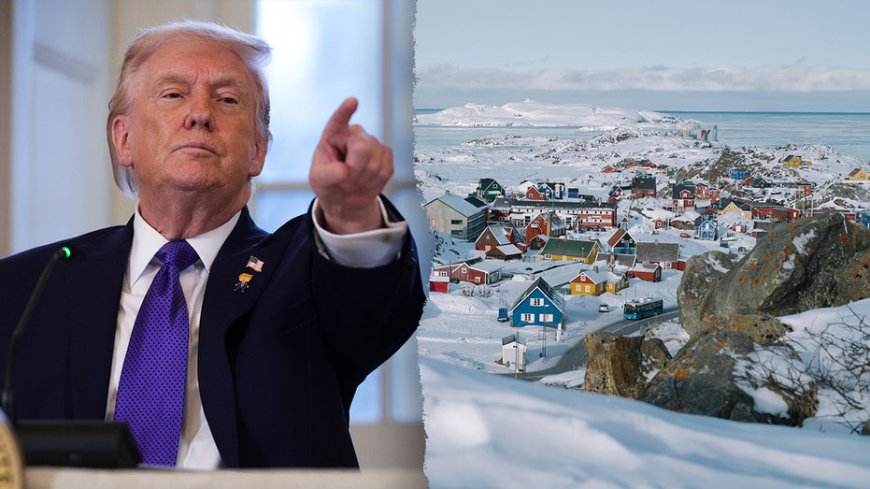
The vote came as President Donald Trump's push for U.S. control of neighboring Greenland added a new security dimension to a debate that has divided the NATO ally for years.
Iceland, strategically positioned in the North Atlantic and roughly 180 miles from Greenland, has no military of its own and relies on NATO and a longstanding defense agreement with the United States for its security, according to RTE and The Associated Press.
Trump's repeated interest in acquiring Greenland has unsettled some Icelanders and raised questions about whether closer ties with the EU could provide another layer of security for the island nation.
Roughly 275,000 eligible voters were asked whether Iceland should resume membership negotiations with the EU.
TRUMP SAYS NATO FAILED TWO KEY TESTS DURING HIGH-STAKES TURKEY SUMMIT: 'NOT HAPPY'
If the referendum had passed, Iceland would have resumed negotiations with the EU, followed by another referendum on actual membership.
Iceland's government, led by Prime Minister Kristrún Frostadóttir, has vowed to respect the result, although the referendum is technically nonbinding.
Still, this was a setback for Frostadóttir, who hoped the result would not deepen divisions after a campaign that exposed sharp differences over Iceland’s economy, sovereignty and control of its valuable fishing grounds.
"I don’t feel that there is bitterness," Frostadóttir told RUV before the final results were tallied. "I know tempers run high for some people, but I have now spent time with a large group of people from all over the country and people are quite open to different outcomes."
The campaign had "lifted discussions about the EU, about Iceland's place in the world, about our general geopolitical situation and status, to a higher level," she said.
Opponents countered that EU membership would not fix domestic economic problems and could force Iceland to surrender too much control over decisions now made in Reykjavik.
"These are not problems that Brussels will solve for us. These are problems that Icelandic politicians must solve," opposition leader Gudrun Hafsteinsdottir, who led the "no" campaign, said.
The fight over fisheries was among the most sensitive issues in the campaign. Fishing has long been central to Iceland’s economy and national identity, and opponents warned that eventual EU membership could weaken Iceland’s authority over its fishing grounds.
Under EU rules, fishing quotas take historical fishing patterns into account, among other factors. Some Icelandic officials argued that the country would retain substantial control because fishing fleets from EU member states have not operated in Icelandic waters for decades.
DENMARK VOWS TO DEFEND GREENLAND AFTER TRUMP REITERATES US SHOULD CONTROL TERRITORY
Hafsteinsdottir remained skeptical that any protections negotiated with Brussels would last.
"I know that the European Union will come up with some promises of some flexibility, especially in the beginning, but we know that it will not be for good," she said.
For many "no" voters, the question was also about whether Iceland needed to change a relationship with Europe that already gives it many of the advantages of integration.
Iceland is part of the European Economic Area, giving it access to the EU’s single market, and belongs to the Schengen passport-free travel zone. Opponents argued those arrangements allow Iceland to maintain close links with Europe without assuming the obligations and compromises of full EU membership.
"By staying independent as we are, we look brightly to the future," said Ragnhildur Skarphedinsdottir, 70, before casting her "no" vote in Reykjavik.
TRUMP ARRIVES AT NATO SUMMIT AS IRAN RIFT LOOMS ABOVE ALLIANCE TALKS
While domestic and economic issues have played a central role in the referendum campaign, Trump's ambitions for neighboring Greenland have also cast a shadow over Iceland's debate about its place in Europe and the broader geopolitical landscape.
Trump has repeatedly expressed interest in acquiring Greenland, a self-governing Danish territory, previously saying the U.S. would obtain the strategically important Arctic island "one way or the other."
The Trump administration has also previously weighed options for acquiring Greenland, including the potential use of military force. Such a move against territory belonging to Denmark, a fellow NATO member, would pose an extraordinary challenge to the alliance and its collective-defense commitments.
Iceland itself was drawn into the discussion earlier this year after former Rep. Billy Long, who is now Trump's ambassador to Iceland, apologized for privately joking to House lawmakers that the country could become the "52nd state" with him as its governor.
The Associated Press and Reuters contributed to this report.
What's Your Reaction?
 Like
0
Like
0
 Dislike
0
Dislike
0
 Love
0
Love
0
 Funny
0
Funny
0
 Angry
0
Angry
0
 Sad
0
Sad
0
 Wow
0
Wow
0