

How My Mission to Save the Earth Began

How My Mission to Save the Earth Began
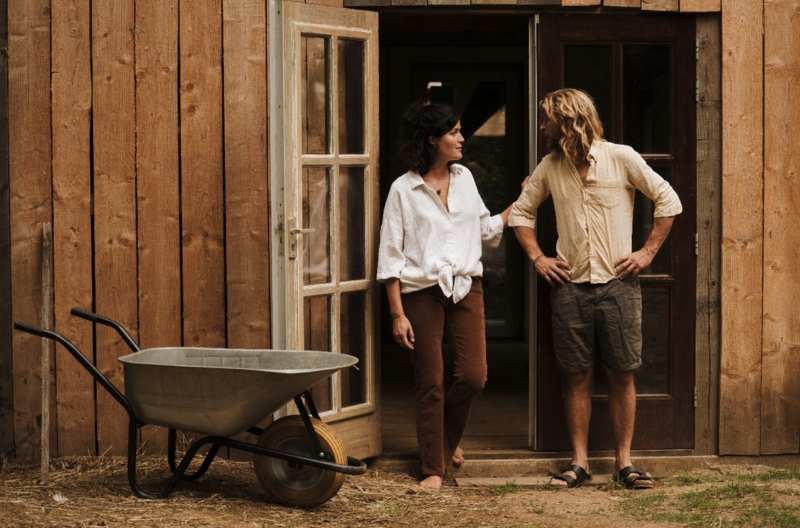
Antoine Prins of Le Rêve de Gaia
When I look back on my childhood, what I remember most is that I didn’t always understand the world around me. Not nature — nature made perfect sense to me. Being outdoors felt completely natural. I loved playing in the forest, I was fascinated by animals, and I could spend hours outside.
What puzzled me was the human world, and the way adults had chosen to organize society. Why was there poverty? Why were there wars? Why was there so much injustice? Why did people sometimes treat each other so harshly? And why did adults seem to do so little about it?
Perhaps many people recognize this when they think back to their own childhood. As a child, you look at the world without all the explanations, interests and systems you come to understand later in life. You simply see what is happening and wonder: why?
I was fortunate to grow up in a loving family in the Netherlands, a country where peace and security seemed almost a given. My parents were independent business owners. They worked incredibly hard, but fortunately also had the foresight to step away from their successful bookshop/ stationery and office supplies business at the right time, before Amazon and other multinational online retailers came to dominate the market. In doing so, they avoided having their business eventually consume their lives completely — something I have seen happen to many business owners over the decades since.
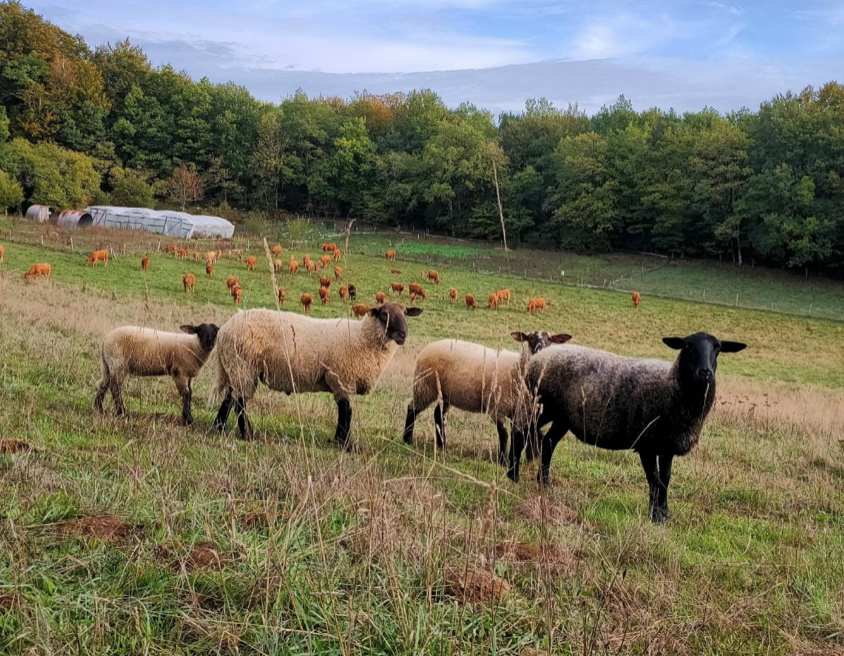 My heart, however, was always with nature, with our Mother Earth and with all the beautiful life that exists here, yet is increasingly under pressure from the way our human systems are organized. As a child, I had a special connection with animals. By my early teens, I wanted to become a veterinarian.
When I was twelve, our family had exchanged the shop in the city centre of Delft for a life on the edge of a nature reserve near the Belgian border. I was given the opportunity to accompany our veterinarian on his rounds every weekend. For a boy of that age, it was an incredible experience.
I visited all kinds of private animal owners and livestock farmers. I saw farms where animals were treated with great love and care, where everything was well organized and the animals were treated with respect.
But sometimes I saw another side as well.
I still vividly remember one morning when we performed two Caesarean sections on cows. At the first farm, everything had been carefully prepared. There was fresh hay and clean straw, and lukewarm water was ready. When the calf was delivered, it was warmly rubbed clean and brought to its mother’s udder as quickly as possible.
Afterwards, we went to another farm. There, no one caught the calf as it was delivered. It fell headfirst onto the concrete floor, into the manure. Almost immediately, it was taken away from its mother and placed in a small pen to be bottle-fed.
As a teenager, that made a deep impression on me. These were no longer theoretical discussions about agriculture or animal welfare. I was seeing with my own eyes just how differently we could treat animals. It taught me at a young age that it isn’t only about what we produce, but above all about how we produce it.
After finishing secondary school — I attended a Steiner school in the port city of Antwerp — what I really wanted to do was travel the world. My parents thought I should study first. Looking back, I’m glad they did. I knew I wanted to work with animals and nature, but not necessarily as a veterinarian, so I chose to study forestry and nature management. There I learned how ecosystems function, how forests are managed and utilized, and how we as humans can work with natural systems.
I also began to understand more deeply that a forest is not simply a collection of individual trees. Everything is interconnected: soil, water, fungi, plants, animals, insects, microorganisms and humans. Nature is not a collection of separate parts, but a living system in which everything affects everything else — and we humans are part of that system too.
As I approached the end of my studies, the question naturally arose: what was I going to do with my life? I didn’t just want a job. I wanted to contribute something.
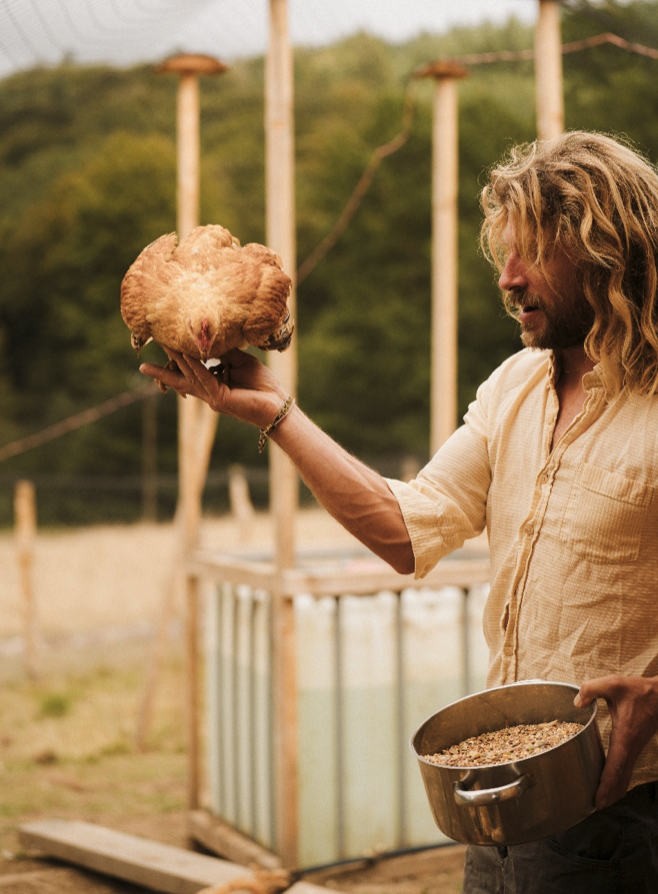 Around 2007, I began developing a plan for a project I wanted to call Natuurlijk Leven( dutch for — Living Naturally). The idea was actually quite simple. I wanted to inspire people to relearn how to live responsibly and sustainably, in harmony with our Earth.
I had always found it strange that our society so often placed the economy above ecology. After all, what do our lives ultimately depend on? Ecology is the foundation. The economy is a system we have built on top of it. Yet we so often treat it the other way around. I wanted to do something about that.
I decided that forestry, agriculture, animal care and sustainable building should become the central themes of Natuurlijk Leven. Not simply to talk about them, but to show that it really is possible to live differently — and enjoyably.
I wanted to find a piece of land somewhere in southern France, in the nature-rich region I had come to know through the many family holidays we spent there, where I could bring all of these elements together. A place where the different themes of Natuurlijk Leven could become part of one living project. Rather than simply telling people how things could be done differently, I wanted to live it myself and share that experience with anyone who was interested.
There was just one practical problem: I didn’t really know how to build something like a house. So while searching for a suitable place for the project, I began spending several months each year working on different renovation and construction projects.
Step by step, I learned to work with my hands in ways that went beyond using a chainsaw and working in green space management. I learned how to build, renovate, repair and find practical solutions. Because having a vision is wonderful, but eventually you have to be able to bring that vision into the physical world.
Slowly, Natuurlijk Leven began to take shape. After several years of gaining practical experience in construction while continuing to work in green space maintenance, tree care and forestry, and after years of searching for the right place, I bought an estate of more than 60 hectares in southern France in November 2012.
My partner at the time, and the mother of my eldest daughter, who was born a year after our move in 2013, liked the idea of Natuurlijk Leven, but the mission itself was primarily mine. I loved living in the middle of nature and working outdoors every day. My partner, however, became unhappy in the place where I was pursuing my life’s mission. Our relationship broke down, and my daughter, then around two and a half years old, returned to Belgium with her mother. I stayed behind alone on the estate.
I had many of the practical skills I needed for the project, but I lacked other skills required to really get it off the ground. After the separation, I found myself with the time and space to rediscover who I was.
About a year and a half later, something remarkable happened. Through our brothers, Margot and I came into contact. After our first phone conversation, she sent me the project plan for an initiative she wanted to create. Its name was Le Rêve de Gaia — The Dream of Mother Earth.
I read her plan and could hardly believe what I was seeing. In essence, it was almost a copy of my own Natuurlijk Leven project. Not literally, of course. The words were different, the way we expressed things was different, and each of us came from a different background. Margot, like me, was Dutch. She had studied European Studies, specialising in governance and policy, followed by a master’s degree in sustainable entrepreneurship.
But the parallels were unmistakable. She too wanted to inspire people to relate differently to the Earth. She too saw the need to place ecology at the centre again. She too dreamed of creating a place where people could learn how to live sustainably. It was as if two people, independently of one another, had been working towards the same answer. The perfect match.
From that moment on, our dreams began to merge. We had long and animated conversations, not only about sustainability and the future of society, but also about spirituality and our own personal experiences — including Margot’s out-of-body experiences and my own childhood memory of a previous life. After a year and a half alone in the forest, I began to open up completely again. Suddenly there was a real possibility of bringing my — now our — dream project to life.
Then, towards the end of 2017, I went through an experience that I would now describe as my spiritual awakening. A profound realization: everything is one.
Through my studies, I had of course already learned to understand the interconnectedness of nature on a physical and ecological level. But suddenly I understood that interconnectedness at a much deeper level. Not simply as ecology, but as something fundamental. Everything is connected. That experience changed the way I saw life, and with it, the way I understood my mission.
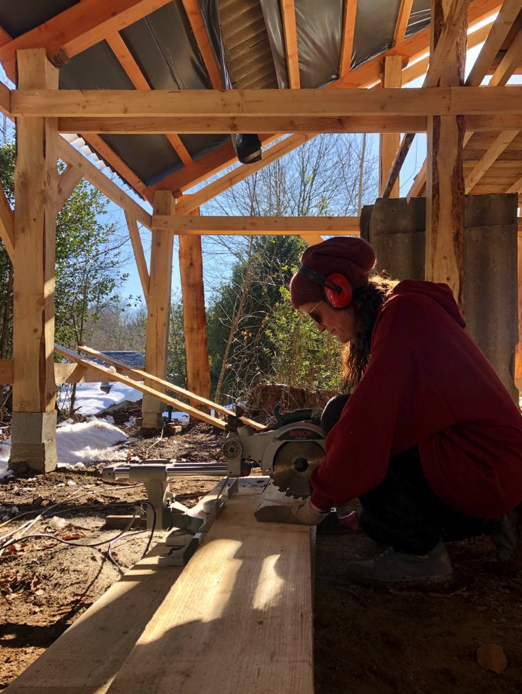 I no longer wanted only to protect a piece of nature and inspire and educate others to do the same. I wanted to contribute to a shift in the consciousness with which we as human beings relate to the Earth. What had once begun as a dream to demonstrate, in one place, how we could live differently with the Earth had started to grow into something much broader.
We built, learned, experimented, made mistakes and, above all, discovered an enormous amount. Forestry, ecology, permaculture, food production, biodiversity, animals, water, soil, sustainable building, education, living together, community building, spirituality, psychology, consciousness and so much more.
It became increasingly clear that all of these subjects are interconnected. And as that understanding grew, Le Rêve de Gaia became less and less of a project in my eyes. It began to grow into a movement.
Over the years, we have laid a kind of energetic foundation from which more and more connections have emerged with people and initiatives driven by a similar motivation. Projects focused on regeneration, organic agriculture, biodiversity, food sovereignty and nature restoration. People preserving old and unusual vegetable varieties, developing new approaches to agriculture, restoring ecosystems, or simply showing in their own corner of the world that things can be done differently. To me, that is perhaps one of the most beautiful developments of recent years.
More and more people seem to be arriving independently at a similar realization: our current way of living is working against nature, and it doesn’t have to be this way. We can relearn how to work with the living system of which we ourselves are a part. I believe we are witnessing a genuine shift in humanity’s collective consciousness. And in my view, consciousness itself is one of the keys to the change we will need in the years ahead.
I see this broader movement becoming more visible all the time. Perhaps it has existed for much longer, but more and more people are beginning to find one another within it.
People who feel that we can do things differently. That we can work and co-create with nature. That we do not have to consume ever more within an artificial world in order to become happier. That abundance, fulfillment and happiness can also grow from cooperation, connection and caring for the living system of which we ourselves are a part.
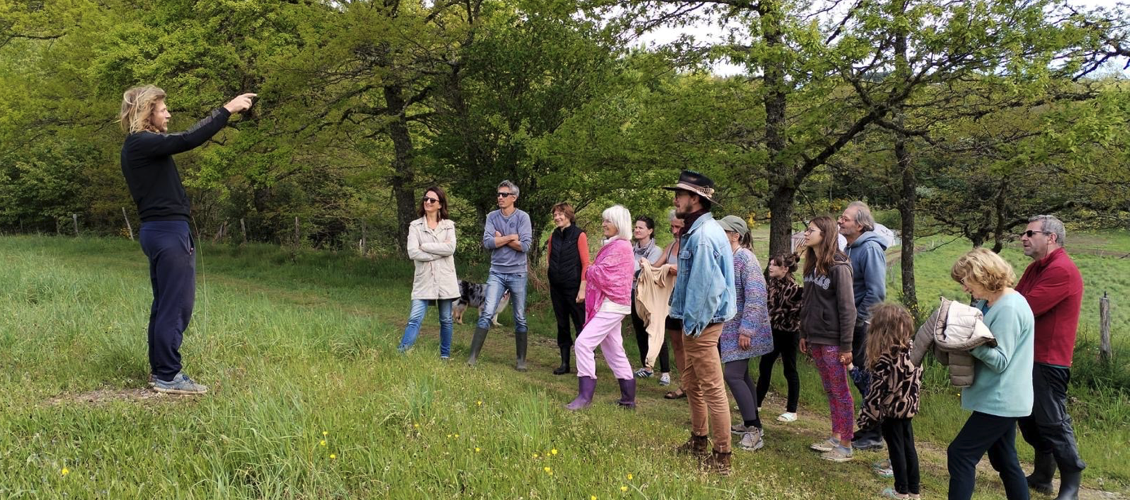 As I grew older, I also became increasingly aware of just how far our human systems had moved away from this natural logic. I saw it not only in agriculture and nature management, but in our economy as well. Small business owners came under increasing pressure, while large corporations gained more and more power through their scale, knowledge and access to complex legal and fiscal structures. To me, it became an example of a much broader problem: systems originally created to support life can eventually become ends in themselves.
And that brings me back to the question at the heart of this story: my mission to save the Earth.
I believe the real question is whether we, as humanity, are willing to relearn how to live within the boundaries and intelligence of nature, within the consciousness field of Mother Gaia. Are we willing to break our toxic patterns and reconnect with Mother Earth herself? Do we dare to make our thinking and our systems serve life again, rather than forcing life to serve our systems? Somewhere along the way, we reversed the order.
First, there is life. Then come the things we humans have added: economy, technology and all the systems we have built around them to make life easier and more structured. Ultimately, all of these things should serve life, not suppress it. Ethical values and common sense are under tremendous pressure today, yet I believe an important key lies precisely there. The better we care for life, the more abundance, health, beauty and wellbeing can grow from it.
That is also what touches me so deeply about nature restoration. When you bring health back to the soil, give a forest the space to develop again, see biodiversity return, and watch people relearn how to work with natural systems, something changes not only in nature, but within us as well.
Life returns. And perhaps that is exactly where the greatest change of our time begins. Not only in how we farm, manage forests or build our homes, but in how we understand ourselves and our place within the greater whole. Here on Earth and within this universe — physically, mentally, energetically and spiritually.
Because ultimately, the systems we create reflect our consciousness. The way we see the world largely determines what we consider normal, the choices we make and the future we create together. What we give our attention to grows.
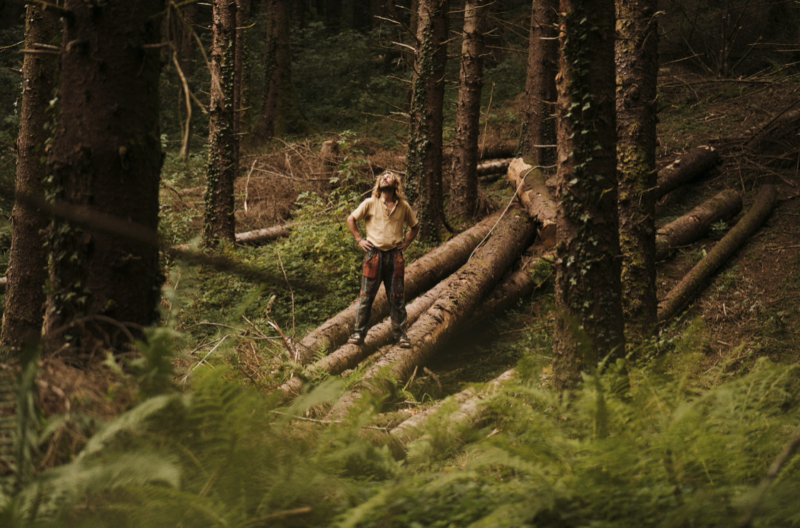 Looking back, my mission began long before I ever knew it was a mission. Perhaps it began with that little boy wondering why adults made war. With the child who spent hours outside and felt such a strong connection with animals. With my decision to study forestry and nature management, the first idea for Natuurlijk Leven, the countless hours spent building and searching for a place, and the period in which I had to rediscover myself. And perhaps most of all, with that one profound realization in 2017: everything is one, and everything is connected.
Today, that dream has a name: Le Rêve de Gaia, the Dream of Mother Earth. And after nine years of working together, Margot and I have come to understand more and more clearly that it was never only our dream. It is a dream that seems to live within more and more incarnated souls here on Earth — people who sense, each in their own way, that something needs to change and who act on that feeling by building, restoring and creating.
Perhaps what we need most is simply to remember what we are part of. We are not separate from nature; we are inseparably connected to it. When enough people become conscious of that connection again, something can shift in humanity’s collective consciousness. Rather than only fighting what no longer works, we can use our creative power to build something new.
For me, that is where the next step lies. Because awareness alone is not enough. If we truly want to live differently, we will have to relearn how to put that awareness into practice. How do we restore our soils, manage forests and produce food without exhausting the living systems that sustain us? How do we build communities in which people reconnect with one another and with their surroundings? And how do we change ourselves so that the systems we create truly reflect the consciousness from which we want to live?
With the Le Rêve de Gaia Academy, we want to create precisely that bridge between awareness and action. We bring together knowledge and experience in nature restoration, ecology, forestry, regeneration, gardening, sustainable and sovereign living, and what it means to live in harmony with Mother Gaia, while also exploring the deeper relationship between all of these subjects and our own consciousness. The aim is not simply to offer another collection of theories, but to bring knowledge, experience and consciousness together so that what we learn can be translated into the way we actually live and the world we create around us.
Perhaps, then, we do not need to wait for someone else to change the world. Perhaps change begins by rediscovering what we ourselves can do, right where we are, with the knowledge and skills we can start developing today.
If you recognize this question within yourself, if something in you also senses that another way is possible, and if you want not only to understand what is happening but to discover how you can contribute to restoring our living Earth, I invite you to explore the Le Rêve de Gaia Academy.
Because ultimately, a different world will not emerge from one dream, one project or one answer. It begins to emerge when people who recognize the same movement find one another, share their knowledge and experiences, and each, from their own place in the world, bring part of that dream into reality.
That, to me, is Le Rêve de Gaia: the Dream of Mother Earth. Not simply something to dream about, but something we can bring to life together.
Take the next step
If this story resonates with you, and you too feel that it is time to reconnect with the Earth and rediscover our place within the living whole, we invite you to take the next step with us.
We created the Earth Initiation Starter Kit as a free starting point for that journey — an invitation to explore, reflect and begin bringing this connection into your own life.
Download the Earth Initiation Starter Kit for free: And if you would like to follow the journey of Le Rêve de Gaia, see what we are creating and connect with the growing movement around us, you can find us on Instagram:
Follow Le Rêve de Gaia on Instagram
Let’s reconnect. Let’s regenerate. Let’s create a different future together.
What's Your Reaction?
 Like
0
Like
0
 Dislike
0
Dislike
0
 Love
0
Love
0
 Funny
0
Funny
0
 Angry
0
Angry
0
 Sad
0
Sad
0
 Wow
0
Wow
0